
Are You a Truth Seeker?
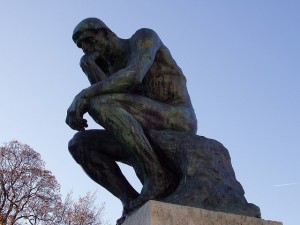
photo by Chris Devers
I’m a self confessed truth seeker! Are you? I discovered this about myself when I realized what a strong drive I have to be right. I am aware that this can sometimes be a problem in relationships. No one likes a know-it-all, the person who just has to be right about everything even when they aren’t, you know, the person who just has to have the last word.
I get that – and though there may be occasions when I lean in that direction, I think my desire to know the real truth of a matter, for the most part, is a virtue. It motivates me to be diligent. It motivates me to be as intellectually honest as I can be with the evidence. It motivates me to listen to people and to hear both sides of an argument.
I have found that if you only hear one side of an issue, it will seem right, until of course, you hear the other side. It is like those TV courtroom dramas where the lawyer gives their closing arguments and it just seems so persuasive, until of course, you hear the other lawyer’s close and it seems even more compelling.
It makes sense to me that to flourish in life we should try to maximize our number of true beliefs, while at the same time minimize our number of false beliefs. Now, blind faith can do the former – if we blindly believe everything, then we will believe all true beliefs. Woo-hoo! But unfortunately, we will obviously believe all false beliefs as well.
On the other hand radical skepticism can minimize our false beliefs. If we are a radical skeptic, then we will not believe anything. But of course that means that we will be lacking any true beliefs as well. It seems that it might take a little work, therefore, to achieve a maximum number of true beliefs and a minimum number of false beliefs.
But does truth really exist? Philosophers like me define knowledge as warranted or justified true belief. Notice what follows from this. If you, or anyone for that matter, know anything, then truth must exist, since truth is part of the definition of knowledge. I would suspect that you probably think that you know some things, or if you don’t, surely some really smart people must have attained knowledge about some things. If so, then you must acknowledge that truth does exist.
But what about the skeptic and the relativist who deny that truth exists in any objective sense? Notice that they think that their view about truth is objectively true, since they think that others should agree with them.
The radical skeptic who denies that knowledge or truth exist, thinks that he knows his view on this is objectively true and that others should agree with him. He believes that it is objectively true that there is no objective truth!
The relativist who says “what is true for you is not true for me”, is saying that it is objectively true that truth & knowledge are just relative to individual or cultural opinion and that everyone should agree with him about that. So he too thinks it is objectively true that there is no objective truth! He thinks that what you believe is true only for you, but what he believes is true for everybody!
I’m sure you can see that both the skeptic and the relativist are caught in acts of self-contradiction. The way they make their claim refutes the claim being made.
The point is, everyone believes their view is true, even if their view denies the existence of knowledge and truth. They still think that they are right about that, and that others should agree.
On this subject of truth, I recently heard an outstanding lecture by the philosopher J.P. Moreland. (available here) He argued that in the history of western culture, religious and moral claims used to be considered knowledge claims, even in the church. But as a result of intellectual attacks on Christianity beginning in the mid 19th century, and a “feelings oriented” anti-intellectual response from the church, that both religion and ethics have come to be thought of by our culture as non-cognitivist.
That is, religion and ethics are no longer thought of as being about knowledge but rather only about speculation, feelings, wishful thinking, or faith. I agree with Moreland’s analysis and his view that religious and moral claims are actually about knowledge.
Join me in taking a closer look at some religious and moral claims and concepts over the next little while with the keen eye of an honest seeker of truth. I suspect that you may be surprised at what we discover.
17 Responses to “Are You a Truth Seeker?”
Leave a Reply
Talk to Someone
Latest Tweets by @michaelhorner3
Archives
- 2013 (28)
- 2012 (28)
- November (2)
- October (2)
- September (1)
- August (1)
- July (3)
- June (4)
- May (5)
- April (4)
- March (5)
- February (1)
utape….According to Matthew 10, John 4, Matthew 28.18 to 19 with john 12, the earthly ministry of jesus was confined basically to israel with the exception of matthew 15 and mark 5. Romans 1.16 says the gospel is to the jew first as we see paul practiing in the book of acts because isaiah 42 and 49 says God wanted to use Israel as a light to the nations. however since she failed, then now we see romans 9 to 11 in place with the gentiles now being the stewards of the manifold grace of God to the jews and the world. Ephesians 2. praying you give your life totally to jesus so he can use you too to bring the good news of the gospel to this dying and lost world. blessings!
Utape–
While it’s not possible to answer every question in complete detail, let me answer you point-by-point as space allows:
To be born again is a one time transaction whereby God responds to a person’s belief and trust in Jesus Christ and indwells that person with the Holy Spirit who seals them for eternal life. I’m not sure what you mean “the conventional born again Christian’s life.” A Christian’s life is one that exhibit’s the attitudes and qualities of having a relationship with Jesus and being guided by the Holy Spirit. Are you completely trusting in Jesus for your salvation? If you are still seeking some sort of “proof,” then you haven’t truly been born again.
The Old Testament was written by Moses, the prophets, Job, David and others who were led by the Holy Spirit to write what God wanted them to write. While these revelations from God were written for all mankind, much of the Old Testament revolves around the Hebrew nation, the Jewish people, who were God’s specifically chosen people to not only document His message but through whom the savior of the world, Jesus Christ, would come.
Thirteen books of the New Testament were written by the apostle Paul, with various others writing the balance. Only those who were considered to have witnessed the resurrected Jesus Christ, or those who were in close contact with those witnesses, were considered authentic writers of the New Testament. Some of those were Matthew, Mark, Luke, John, Peter, and James.
The word “authorized” in the King James Version of the Bible was simply to designate that King James gave his official authorization for biblical scholars of that day to translate the Hebrew, Aramaic, and Greek texts into English. The term does not mean that the King James version was the only authentic translation. Several good translations had been previously made, and there are many excellent modern English translations today.
People have done many terrible things in the name of Christianity over the centuries. However, my firm belief is that true, born again followers of Christ made up only a tiny fraction of those people. Roman Catholicism for example literally put Bible-believing Christians to death because they refused to join the Roman church. Aren’t you glad that God truly knows each person’s heart and will hold every person accountable for their actions one day?
I would say that today’s Jews are a combination of direct descendants of Abraham and also many gentiles who converted to Judaism over the centuries. The records are now pretty hard to interpret. That’s one of the challenges the Jews are having in determining who will be admitted to the priesthood when the temple sacrifices one day resume. It’s a sad thing that while Jesus came to “his own,” (I.e., the Jews) they didn’t, or wouldn’t, recognize him for being the Messiah. They were looking for a conquering Messiah, not one that would initially give his life for sin. That is still true today as the Jews are still awaiting their Messiah. It won’t be until Christ’s return that they will, as a nation, bow their knees to Jesus.
I’m afraid I can’t knowledgeably address who the modern day descendants of Esau are. In fact, I’m not sure anyone really knows the answer. There have been more than 3,000 years of mixed marriages that have pretty much muddled the facts.
Jesus did not come to save only the Jews but all people who would believe. (John 1:12, 3:16, Romans 1:16) However, the Jews were the ones he initially revealed himself to. (John 1:11). When the Jews rejected him as Messiah, he turned his attention to the gentiles. Paul teaches us in Romans that God has set aside the Jewish nation as a whole for a time and is bringing people to salvation from the gentiles. These are THE Church, the bride of Christ. At the rapture, the Church will be taken to heaven and God will once again deal specifically with the Jewish nation, bringing them to repentance and understanding that Jesus Christ is, in fact, the promised Messiah. (Revelation chapters 4-19).
Jah, or Yah, is short for Yahweh, the name of God. It is a term used by the Rastafari which is an Abrahamic belief which developed in Jamaica in the 1930’s following the coronation of Haile Selassie I as Emperor of Ethiopia. Since the people claimed that Haile was god and worshiped him as such, they were worshiping an idol in direct contradiction to the second command of God. (Exodus 11)
To my knowledge, only the Mormons teach that black people are black because of sin; literally that they are children of Satan. It would seem from the description of the Garden of Eden in Genesis 2 that Adam and Eve lived in an area of what is now Iraq. However, we’ve not told specifically “where” they were created. Since all mankind, every race, is biblically traced back to Adam and Eve, regardless of what color they were created by God, they had the full genetic material that would allow for all races to be generated. Red, yellow, brown, white, black–they all originated with Adam and Eve.
Tom-
When you say Jesus saw His mission as one of healing and teaching His fellow Jews, do you then suggest that He came to save only the Jews?
Tom-
.What are your thoughts on Reggae music? And reverence in Jah?
.What are you thoughts on people of African descent being a cursed people? (The curse on Ham’s son Canaan by Noah.)
. Do you believe that Africa is the cradle of mankind? (There is all the evidence to support this claim) If so, do you then believe Adam and Eve were created black?
Thanks Tom.
Your response above has been quite insightful to say the least.
I have been born again before, but I wouldn’t say I have been living the conventional born again Christian’s life.( Not that I’m proud to say that)
Right now I’m just about knowing the real history of mankind and Christianity. I have faith in Jesus, but I need to back it up with History, the true history.
You seem to be well versed in this subject, if you could kindly let me know your thoughts on the following:
. Which group of people wrote the old testament of the. bible. And what was the name of the religion that followed those teachings back then.
. Which group of people wrote the new testament of the bible.
. Why did it have to be approved by Britain’s King James?
. Do you agree that Christianity has been associated with a lot of afflictions on mankind particularly in ancient Europe, among Jews , native America and colonial Africa?
. Are the modern day Jews the true descendants of Jacob, the son of Isaac? Why are they considered God’s chosen people while they don’t even subscribe to the new testament teachings?
. Who are the the modern day descendants of Esau, son of Isaac? Is there a war among them and descendants of Jacob?
As you can see above, my questions are rather endless, I however hope you can shed some light on the above. Kindly quote a bible verse, wherever possible. I will more than appreciate your feedback.
Utape–
The names we use in English are not the same names which were used in Hebrew and Greek of the first century, but are transliterations of the originals. Just as nobody called Jesus “Jesus,” but Jeshua, Jesus referred to the apostles by their Hebrew or Aramaic names, as follows:
Simon was Shimon. James was Yakov (that is, Jacob). John was Yochanan. Bartholomew was Bar-Talmai (son of Ptolemy). Matthew was Mattityahu, meaning, “gift from God.” Thomas was Tau’ma, an Aramaic name. Thaddaeus was a variant of Theudas, which was a Grecian version of Judas or Yehuda.
Andrew and Philip are interesting because those are clearly Greek names—Andreas and Filippos; there are no Hebrew equivalents. Thus, we may surmise that Andrew and Philip were either Grecian-Jews or Grecian-Gentiles. In all probability, we may discount the theory that they were Gentiles: Jesus was a Jew who saw his mission as teaching and healing his fellow Jews. “I am not sent but unto the lost sheep of the house of Israel.” Matthew 15:24. It would be hard to imagine preaching to Jews while having Gentile Apostles. Judas Iscariot was Yehuda.
I’m not sure what you mean by “modern Christianity,” but supposing you mean more recent than the first couple of centuries, yes, the Roman church corrupted many of the basics of true Christianity. However, they did NOT edit the original text. What we have today can be accurately traced back to the 1st and 2nd centuries, a hundred years before Roman Catholicism was created.
So, while you read the Bible regularly Utape, would you consider yourself to be a born-again believer?
Thank you Tom.
Yes I have read the new testament, and still do.I believe in God and in His son Jesus Christ the Lord our saviour. However I have read other historical texts as well. Due to reading those texts I’m inclined to be skeptical about the mentioned locations and off course the names( to fit language, for example how would we have somebody named Peter or James in the claimed Nazareth which is in the middle east?). For modern Christianity was brought by the Romans, with an evil intention. To push their agenda. They might have edited the original text. My ultimate point is that, the ever living word of God made way through those ancient civilizations and got to us through the bible, but while we read it is up to us to pray for discernment.
Hebrews 5:14
But solid food is for the mature, who because of practice have their senses trained to discern good and evil
Utape–
Thanks for joining the discussion. All views are welcome.
However, I don’t agree with your conclusion that the “story” of Jesus was of African descent. And that’s because Jesus was not just a story or a fictitious character but an actual living human being. Little in ancient history is more thoroughly documented than Jesus of Nazareth. Have you ever read the Bible, particularly the New Testament, Utape?
You conveniently (or hopefully not, perhaps for lack of Knowledge ) leave out the truth about where the story of Jesus came from. This is before it got stolen by Europe from Africa’s Kemet Ancient civilization, and then the Romans plagiarized and presented it to Europe as if it were their very own.
thank you Sallie for your good comment its a good comment
I can’t tell you how important I believe the truth is. It’s not just about being “right.” It’s about knowing WHY something is happening so you can make it better. It’s about creating CHANGE at the deepest levels. It’s about getting the things out of out life that no longer serve is and how can we do that if we don’t know the TRUTH? It is only through knowing our truth that true healing can begin.
good article i try to be a truth seeker
Thank you for the links Michael. Much appreciated!
Jordan
Jordan – Thanks for your comment. Assuming you have the right person, it is possible that I commented on predestination and free will during a Q & A time after a lecture or debate. I can’t remember ever giving a lecture on the topic though. The position you have described is the position that I think is most Biblical and reasonable. Probably the best place to learn more about it is in the writings of W.L. Craig. He has both popular and scholarly writings on this topic on his website. Here are a few links to get you started – enjoy!
http://www.reasonablefaith.org/how-can-christ-be-the-only-way-to-god
http://www.reasonablefaith.org/no-other-name-a-middle-knowledge-perspective
http://www.reasonablefaith.org/middle-knowledge-and-christian-exclusivism
Hi Michael,
I had the privilege of hearing you speak on the topic of predestination over ten years ago. At that time you were conveying the idea that God chooses those who will be saved, but that we also have free will to want to be chosen (obviously paraphrasing a lot here).
Do you have a book on this issue, or recommend an article or reading on this subject? I find that the point of view you gave was refreshing, and I think it is the most logically sound argument from the scriptures that I have heard.
Thank you,
Jordan
Thanks DSM – the type of relativist you are describing is the individual relativist or subjectivist, who thinks that truth is relative to his opinion. In his view if he thinks a proposition is true then it is true. Consider your first question with the following example: Does the subjectivist who thinks 2+2=5 really require any “objective truth” in order to support his views?
In order to be rational or claim to have knowledge he requires justification or warrant, that is, that he has sufficient evidence, or that his belief was formed in reliable way, or that his faculties are functioning properly in an environment for which they were designed. If he doesn’t care about being rational or being able to claim he knows 2+2=5, then he doesn’t “require” anything else. But then no one else should care about what he says or thinks. The fact is that most relativists do want others to agree with their claims, and if they do, then their claims require justification or warrant.
Terrific post Michael. Just one question – you stated that knowledge is defined as warranted or justified true belief. Does the relativist, who feels self-justified in their belief, really require any “objective truth” in order to support their views? If one’s belief is entirely devoid of an external frame of reference, what difference does objective truth make to them?